


Quick Comparison of the Top Companies
Starting prices are indicative and shift by scope. Use them to gauge tier, not to lock a quote.
| Company | Founded | Location | Services | Platforms | Industries | Starting Price | Best For |
|---|---|---|---|---|---|---|---|
| Weapplinse | 2016 | USA (multi-city) | Custom apps, MVP, UI/UX, maintenance | iOS, Android, Flutter, React Native | Fintech, healthcare, retail, logistics | $25k+ | Custom, scalable builds |
| Fueled | 2007 | New York | Product design, native apps | iOS, Android | Media, retail, finance | $50k+ | Design-led products |
| WillowTree | 2007 | Charlottesville | Digital products, strategy | iOS, Android | Enterprise, media | $75k+ | Enterprise scale |
| Intellectsoft | 2007 | Palo Alto | Enterprise apps, IoT | iOS, Android, cross-platform | Construction, finance | $50k+ | Enterprise mobility |
| ArcTouch | 2009 | San Francisco | Connected apps, IoT | iOS, Android, Flutter | Retail, media, IoT | $50k+ | Connected devices |
| Dogtown Media | 2011 | Los Angeles | Mobile, AI, IoT | iOS, Android | Healthcare, fintech | $50k+ | AI-driven apps |
| Y Media Labs | 2009 | Redwood City | Design, native apps | iOS, Android | Retail, finance | $75k+ | Brand-grade UX |
| Zco Corporation | 1989 | Nashua | Custom apps, AR/VR | iOS, Android | Enterprise, gaming | $25k+ | Full-service builds |
| OpenXcell | 2009 | Irvine | Custom apps, web | iOS, Android, Flutter | Startups, SaaS | $25k+ | Startups and SaaS |
| Appinventiv | 2015 | New York | Custom apps, MVP | iOS, Android, Flutter | Fintech, retail | $25k+ | Scaling startups |
| Hyperlink InfoSystem | 2011 | New York | Mobile, web, AI | iOS, Android | Varied verticals | $20k+ | Budget-conscious teams |
| Konstant Infosolutions | 2003 (US ops) | — | Mobile, e-commerce | iOS, Android | E-commerce, retail | $20k+ | E-commerce apps |
| Cheesecake Labs | 2013 | San Francisco | Product engineering | iOS, Android, React Native | Fintech, media | $50k+ | Product engineering |
| Mobisoft Infotech | 2011 | Houston | Mobile, cloud | iOS, Android, Flutter | Healthcare, transport | $25k+ | Cloud-connected apps |
| Utility | 2013 | New York | Native apps, strategy | iOS, Android | Retail, sports | $75k+ | Consumer-facing apps |
How We Selected the Top Mobile App Development Companies
Rankings mean little without a method. So we scored each firm against nine criteria that predict delivery quality and long-term fit. This approach keeps the list criteria-driven rather than opinion-driven.
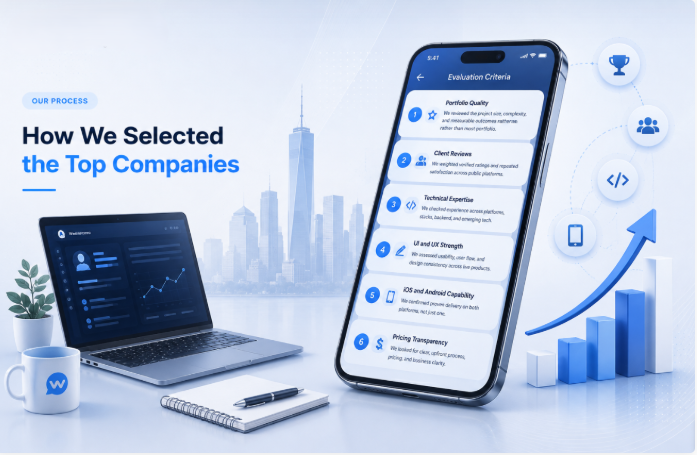
Portfolio Quality
We reviewed shipped apps, complexity, and measurable outcomes rather than concept mockups.
Client Reviews
We weighted verified ratings and repeat-client feedback across public directories.
Technical Expertise
We checked depth in native and cross-platform stacks, backend, and cloud integration.
UI and UX Strength
We assessed usability, accessibility, and design consistency across live products.
iOS and Android Capability
We confirmed strong delivery on both platforms, not just one.
Pricing Transparency
We favored firms that explain scope, rates, and estimates clearly.
Industry Experience
We looked for proven work in regulated and complex verticals.
Case Studies
We prioritized documented results, such as retention lifts or faster release cycles.
Client Retention
We valued long partnerships, since retention signals reliable delivery.
Each firm below meets a strong bar across these factors. For a deeper walkthrough of vetting steps, our guide on how to choose the right mobile app development company in the USA breaks the process down further.
The Top Companies, Profiled
Weapplinse
Weapplinse builds custom mobile products for startups and enterprises across the USA. The team focuses on scalable architecture, clean UX, and predictable delivery. As a result, clients get apps that hold up under real usage and growth.
You can review the full service scope on the mobile app development company in USA page.
Fueled
Fueled is a design-led studio known for polished consumer apps. The New York team pairs product strategy with strong native engineering.
WillowTree
WillowTree serves large organizations that need enterprise-scale delivery. The firm handles complex products with structured teams.
Intellectsoft
Intellectsoft focuses on enterprise mobility and connected systems. The team works well on projects that touch IoT and legacy integration.
ArcTouch
ArcTouch builds connected apps that span phones, TVs, and IoT devices. The San Francisco team pairs engineering depth with product thinking.
Dogtown Media
Dogtown Media, one of the notable iPhone app development companies USA clients cite, works heavily in AI and healthcare. The Los Angeles team ships data-driven mobile products.
Teams comparing LA options can also explore local mobile app development in Los Angeles.
Y Media Labs
Y Media Labs is known for high-craft design and consumer experiences. The team builds apps that feel refined and intentional.
Zco Corporation
Zco is one of the longest-running firms on this list. The company delivers full-service builds, including AR and VR.
OpenXcell
OpenXcell supports startups and SaaS teams with fast delivery. The firm balances speed with reasonable pricing.
Appinventiv
Appinventiv helps startups move from MVP to scale. The New York team focuses on growth-stage products.
Hyperlink InfoSystem
Hyperlink InfoSystem offers a wide service range at accessible prices. The firm suits budget-conscious teams that still want solid delivery.
Konstant Infosolutions
Konstant Infosolutions focuses on e-commerce and retail apps. The team handles catalog-heavy, transaction-driven builds.
Cheesecake Labs
Cheesecake Labs works as a product engineering partner. The team plugs into internal squads and ships steadily.
Mobisoft Infotech
Mobisoft Infotech builds cloud-connected apps for regulated sectors. The Houston team pairs mobile work with backend depth.
Utility
Utility builds consumer-facing apps with strong strategy support. The New York team focuses on measurable engagement.
What Services Do Mobile App Development Companies Offer?
Most vendors advertise "app development," yet scope varies widely. That gap causes budget surprises later. To avoid that, confirm exactly which services a firm covers before you sign.
- Discovery and strategy: Requirements, scope, and product roadmap.
- UI/UX design: Wireframes, prototypes, and accessible interfaces.
- Native development: Platform-specific iOS and Android builds.
- Cross-platform development: Flutter and React Native for shared codebases.
- Backend and API work: Databases, servers, and cloud integration.
- QA and testing: Functional, performance, and security testing.
- Maintenance and support: Updates, monitoring, and bug fixes after launch.
A strong provider bundles these into one accountable process. To see how full-service delivery affects outcomes, review how professional app development services transform businesses. In short, broader scope under one vendor reduces handoff risk.
How Much Does Mobile App Development Cost in the USA?
Cost is the first question and the hardest to pin down. Prices swing based on features, platforms, and team seniority. Still, ranges help you plan.
- Simple apps: roughly $20,000 to $50,000.
- Mid-complexity apps: roughly $50,000 to $120,000.
- Complex or enterprise apps: $120,000 and up.
Several factors move these numbers. For example, native builds on both platforms cost more than a single cross-platform app. Likewise, integrations, compliance, and custom design add hours. Because estimates vary, treat any quote as scope-dependent.
For a detailed breakdown, see our mobile app development cost in the USA for 2026 guide and the broader 2026 cost overview. Industry directories such as Clutch also publish rate benchmarks worth comparing. The takeaway is simple: define scope first, then price it.
How Long Does It Take to Build a Mobile App?
Timelines follow complexity, not calendar wishes. Rushing the schedule usually raises defects and rework. Therefore, plan around realistic phases.
- MVP: about 2 to 4 months.
- Standard app: about 4 to 7 months.
- Complex app: 7 months or more.
Design, development, testing, and store review each take time. In addition, feedback cycles and integrations can extend delivery. An agile process keeps timelines predictable by shipping in short iterations. Our overview of agile mobile development explains how that cadence reduces surprises. Put simply, clear scope plus agile delivery keeps launch dates honest.
How to Choose the Best Mobile App Development Company
Picking a partner is a risk-management decision. The wrong choice shows up as missed deadlines and rising costs. So evaluate vendors against evidence, not promises.
- Review the portfolio for apps similar in scale and complexity to yours.
- Check verified reviews and ask for repeat-client references.
- Confirm platform depth across iOS, Android, and cross-platform stacks.
- Assess UI/UX quality in live products, not just mockups.
- Demand pricing transparency with clear scope and assumptions.
- Validate industry experience in your vertical and its compliance rules.
- Ask about support and post-launch maintenance terms.
For hiring specifics, our guides on how to hire mobile app developers in the USA and the top benefits of hiring US mobile app developers go deeper. You can also compare providers in our roundup of the best mobile app development company in the USA. A structured checklist turns a risky decision into a confident one.
Getting Started
The right partner turns a risky build into a predictable launch. This list ranked 15 strong firms against portfolio quality, reviews, technical depth, and retention, so you can shortlist with confidence. Use the criteria, compare quotes, and match each vendor's strengths to your goals.
If you want custom mobile app development in the USA with transparent pricing and steady delivery, Weapplinse is ready to help. Explore our main site or reach out to scope your next project.
Frequently Asked Questions
The top firms combine strong portfolios, verified reviews, and reliable delivery. This list highlights 15 such companies, including Weapplinse, Fueled, WillowTree, and others. Each meets clear criteria for quality, platform depth, and industry experience.
No single firm fits every project. The best mobile app development company USA teams choose depends on scope, budget, and industry. Match the vendor's strengths to your product goals rather than chasing a generic label.
Costs usually range from $20,000 for simple apps to $120,000 or more for complex builds. Features, platforms, and integrations drive the final number. Define your scope first, then request a detailed estimate.
An MVP often takes 2 to 4 months, while complex apps take 7 months or longer. Design, testing, and store review all add time. Agile delivery keeps timelines predictable through short iterations.
The best fit depends on your needs. Startups often prefer flexible, budget-aware Mobile App Developers USA teams, while enterprises need structured, large-team delivery. Compare vendors against your specific requirements.
Look for relevant portfolio work, verified reviews, and transparent pricing. In addition, confirm platform expertise, industry experience, and clear support terms. Evidence should back every claim a vendor makes.
Startups usually benefit from firms that ship MVPs quickly and price flexibly. Companies with strong agile processes and reasonable rates fit early-stage budgets. Weapplinse and similar partners suit teams that plan to scale.
Native development builds separate apps for iOS and Android using platform tools. Cross-platform development, such as Flutter or React Native, shares one codebase across platforms. Native offers peak performance, while cross-platform saves time and cost.
Start by defining your scope and budget. Next, shortlist firms with matching experience, then review portfolios and references. Finally, compare transparent quotes before you decide.
Common tools include Swift and Kotlin for native apps, plus Flutter and React Native for cross-platform builds. Backend work often uses cloud services, APIs, and modern databases. The right stack depends on your product needs.
Rates vary by region, seniority, and engagement model. Many US firms price projects from around $20,000, while enterprise work runs far higher. Ask for scope-based estimates to compare vendors fairly.
US-based teams offer closer collaboration, aligned time zones, and clearer compliance handling. For regulated industries, that proximity reduces risk. Our guide on why US businesses need custom mobile apps explains the trade-offs.


